
成田空港が「衰退」しつつある理由を考えてみる
羽田空港の国際線が大幅に増便されて以降、成田空港は「遠い」「不便」といったスティグマ(烙印)が広まっているように感じます。個人的には自宅から成田空港のほうが利便性がよい(乗り換え回数が少なくて、しかも空いてる)ため、成田空港は嫌いじゃないので、なんとなく、残念です。
とはいえ、成田空港も第3ターミナルの新設や、入場時のパスポートチェックの廃止など、いろいろ努力されていて、旅客数もこのところ増え続けています。しかし、これからの国際的な交通のながれを考える上で、ひとつ気になる統計が。
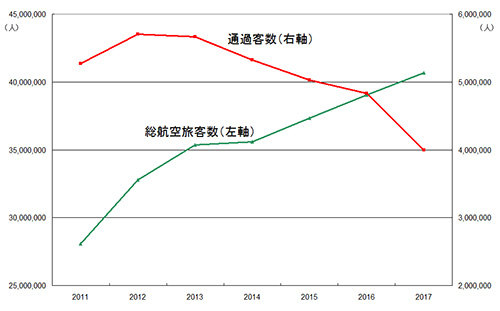
(出典:成田国際空港(株)「空港の運用状況」)
航空旅客数は増えているのですが、「通過客」の数はけっこう、いい勢いで減少しているようです。
「通過客」とは、到着後に日本に入国しないで、そのまま他の国へと旅立っていく方々で、トランジットなどという言い方もします。なぜ成田空港でトランジットするのかといえば、北米・欧州とアジア諸都市を行き来する際、成田まで来て一度降機して、乗り換えて最終目的地へ向かう必要がある人たちも、けっこう、いるからなんですね。例えばベトナムから北米に行こうと思えば、直行便はないので、成田で乗り換える必要があります(もちろん香港や韓国などで乗り換えることも可)。
また直行便よりも、トランジットしてもらったほうが、航空会社として利益をあげやすい構造にあるようです。都市の順列組み合わせすべてに直行便を飛ばそうとすれば、各便の乗客は少ないのに、とんでもなく数多くのフライトを飛ばす必要があります。むしろ、どこかの主要都市に小さな機体のフライトで一度集まってもらって、それからまとまって大きな機体で長距離を飛んでもらったほうが、航空会社としては効率性が高く、安い運賃を提供できますし、利益も確保できます。いわゆる「ハブ・アンド・スポーク」という考え方です。宅急便の集配をイメージしてもらえるといいんじゃないかと思います。
そういうことで、アジア方面から北米あるいは欧州へ移動する人たちの「ハブ空港」として成田はこれまで重要な役割があったわけですが、ソウルや香港なども空港を拡大整備し、競争が激しくなったことから、アジアにおける乗り換え空港としての地位確保が厳しくなってきているのが、ここ10~20年くらいの傾向ではないでしょうか。
とはいえ、直近でも通過客が減り続けているのは別の理由があるようにも思われます。というのも、flightradar24.comで暇つぶしに飛行機の航跡を眺めていると、北太平洋を飛んでるフライトのかなりの数が中国諸都市と北米諸都市の間を飛んでるフライトなんですね。かなり前からflightradarを眺めていますが、ほんと、中国線の割合がすごい勢いで増えているように感じます。
ということで、わざわざ成田で乗り換えなくても、中国から直接、北米へと移動することが容易かつ安価になってきてるのでしょう。さらに今後は、機体の性能・燃費効率の改善で、ベトナムやシンガポールから北米への直行便を飛ばすようになるそうで、なおさら成田の通過客は減少しそうな気がします。超長距離の直行便は利益率が悪いそうですが、ビジネス客需要が十分あれば成立するようです。
先日ボストンに出張に行った際も、エコノミークラスの機内はベトナムの方々が多数いらっしゃいました。彼らがベトナムからの直行便で北米に向かうようになったら、日航のボストン線の機内は空いてしまい、利益が出なければ運休になってしまうかもしれません。それは彼らにとってはよいことでしょうが、僕らにとっては、ちょっと不便ですよね。そういう意味でも通過客を一定数維持したほうがよいはずですが、この減少傾向が続くと、ちょっと、ヤバいんじゃないかな、とも思います。
2018/03/07 12:27 PM - ツイート
未分類In the end, FY to AI
Nowadays everyone is worried about AI. One thing that really bothers me about artificial intelligence is whether we, or I, or each of us as human being, are really intelligent? Maybe you are more intelligent than a toad or a goat, but are we behaving more rationally than other creatures?
In fact, there's been abundant evidence of us human being "irrational" thanks to the progress in behavioral economics and social psychology. So, we might be intelligent but we're still irrational. Then the question is, aren't we living in the world of "Artificial Rationality?" Well, in fact we might be living in the world of artificial rationality where rationality itself is manufactured.
You and I are of course not confident and arrogant enough to claim ourselves to be perfectly intelligent, but we are forced to strive to behave rationally. At the same time machines are becoming more intelligent, not being asked to be rational.
Isn't there something unfair between the such machines and us? Machines are not questioned about their rationality while they are trained to become more "intelligent." Now we're questioned about rationality, and also not so much praised for our intelligence—while these machines can't survive without electricity supply that WE produce.
Well, maybe we shoud be confident about ourselves to say "FY" to "AI" as AI doesn't have the ability to question its own rationality.
2018/03/03 9:56 PM - ツイート
未分類